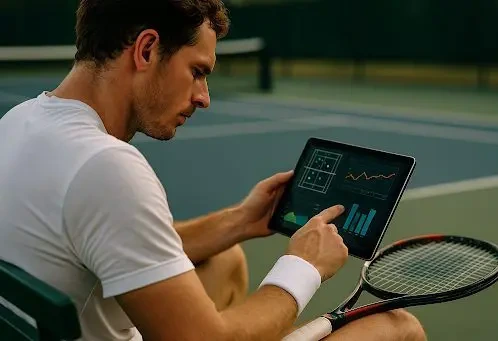
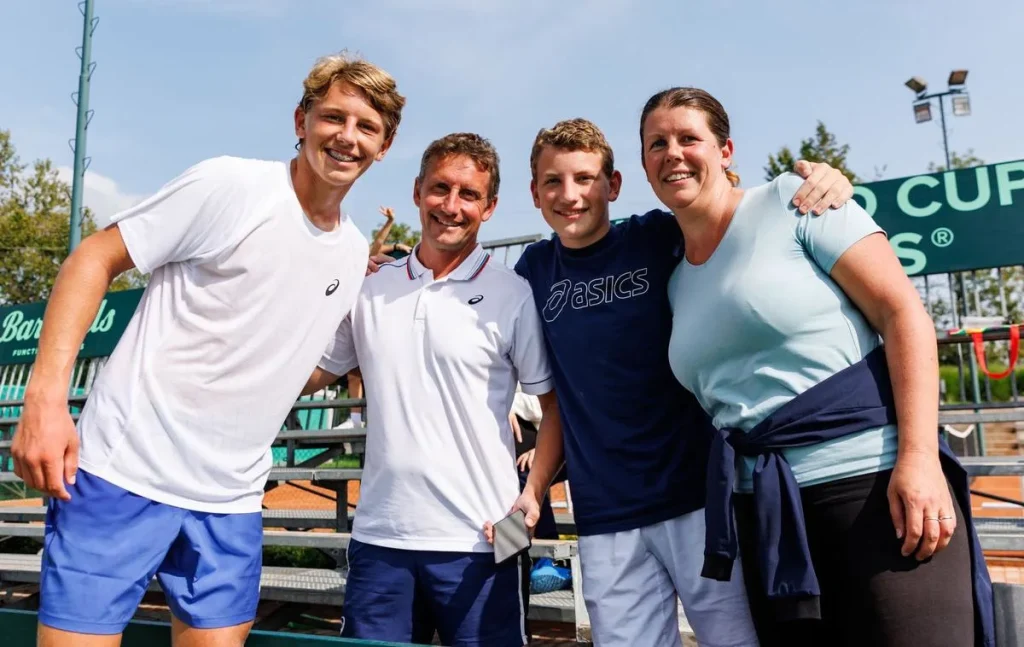
At first glance, tennis appears to be an individual sport, as the player is alone on the court, competing against an opponent. The player is also the only one in the spotlight and, at times, the one lifting the trophy. However, the secret to the success of every accomplished tennis player lies in the tennis triangle, which must function smoothly behind the scenes. The tennis triangle consists of the tennis player, the parents, and the coach, each with a specific role to fulfil to ensure this complex relationship works and helps the player achieve their goals. Even when the player’s ambitions do not extend to becoming a professional or winning Wimbledon, their goals remain important, and the roles of the parents and coach are no less significant.
The Role of the Player
The player is the reason this triangle exists. To make the most of their involvement in tennis and reach their goals, the player must follow certain principles:
- The desire to play and compete in tennis must come from the player, not from anyone else.
- Tennis should not be solely a source of external rewards such as points, rankings, and trophies, but also an enjoyable activity the player wishes to pursue regardless of the outcome. In other words, there must be strong intrinsic motivation to play tennis.
- If the player chooses to undertake serious training, they must commit to this goal for an extended period, as positive results may emerge at different stages of their career.
- The player should not only follow the coach’s instructions but also actively participate in training sessions, engaging with the coach and providing valuable feedback.
- The player needs to adopt important life values such as honesty, hard work, confidence, sincerity, and friendliness.
The Role of the Parents
Without parental support, the player would not be able to play tennis at all. Parents also need to fulfil certain roles to ensure the triangle functions effectively.
- They must support the player through all stages of development.
- This support includes not only financial and logistical assistance but also emotional support throughout the challenging years of adolescence, puberty, and beyond.
- Parents serve as role models for their children in terms of behaviour and relationships with other tennis players, umpires, coaches, and the sport as a whole.
- They must instil essential life values in their children from an early age.
As the most important authority figures in a child’s early life, parents bear enormous responsibility and possess significant influence over the child’s career. Research has shown that without strong support and interest from parents, it is very unlikely that a player will reach their full potential.
Conversely, it has also been shown that much of the emotional stress affecting young tennis players originates from their parents. If this continues in the long term, it often leads to burnout and the premature end of a young player’s tennis career. For this reason, we highly recommend the free ebook Being a Better Tennis Parent by the International Tennis Federation, which provides parents with a better understanding of the complexities of competitive international tennis and the demands young players face while pursuing their tennis careers. The free ebook offers parents deeper insight into the psychology of winning and losing and how they can help their children cope with these experiences.
It contains numerous suggestions and recommendations on:
- How to discuss matches,
- How to provide emotional support in any situation,
- How to recognise signs of stress and address them,
- How to behave and what body language to display to your child during matches, and much more.
Similarly, the USTA offers a Parent’s Guide with further sound advice on supporting your child throughout all stages of a tennis career. Their guide covers various topics, including:
- How to set goals and manage expectations,
- Why it is crucial to play tennis with your children from time to time, regardless of whether you are a tennis player,
- How to guide, support, and interact with your child at different developmental stages (ages 3–7, 8–11, 12–15, and 16–18), and how to prepare and plan for possible collegiate tennis, which can be a highly rewarding experience from both sporting and educational perspectives.
The Role of the Coach
The coach acts as a the most important person, guiding and leading the player’s development. He or she is responsible for the player’s athletic and personal progress.
- The coach uses expertise in tennis to develop and enhance the player’s technical, tactical, mental, fitness and conditioning skills.
- The coach creates short- and long-term plans for the player’s development, identifying key periods as well as potential pitfalls and setbacks that may arise.
- The coach is responsible for analysing and evaluating the player’s performance, results and define training goals,
- The coach may address specific behavioural issues in agreement and cooperation with the parents.
Summary
The tennis triangle functions optimally only when:
- All participants cooperate fully,
- Each knows their role and performs it well,
- There is clear communication between all participants,
- All participants work together to solve the player’s problems as they arise.
A competitive tennis journey is highly complex and continually evolving; therefore, the parents, player, and coach must remain flexible to adapt to new conditions and consistently work together to address the challenges that inevitably arise during this process.
It is also important to emphasise the value of constant and open communication between the tennis player, coach, and parents, which should be based not only on subjective assessments but also, as much as possible, on objective and measurable data that tennis players can now collect using various smart devices and apps.
In your opinion, how could modern technologies and the use of AI improve the effectiveness of the tennis triangle and accelerate the player’s development?