There was once a well-known rule that, to achieve top-level quality in any activity – whether sport, music, dance, or another field – you needed 10,000 hours of practice over 10 years. This rule no longer applies, or at least not to all the activities mentioned above. In sport, the long-term development of an athlete is extending and now certainly lasts more than 10 years, which also means a greater annual training volume.
Differences between sports
Let us first consider the differences between sports. The annual number of practice hours varies greatly from sport to sport. Long-distance runners practise around 600 hours, rowers 900 hours, cyclists 1,100 hours, and swimmers as much as 1,300 hours per year. The differences between sports are significant. The big question is, where do these differences come from? They result from the different nature of the movements, leading to different types of workload. If we compare only two sports that differ in annual training volume, the difference becomes clear.
10–12 hours weekly
Long-distance runners train for 10–12 hours per week. They take 185–210 steps per minute, which amounts to 148,000–168,000 steps per week. The muscles of these runners function both concentrically and eccentrically. The workload duration is approximately 150 ms per step, and the runner’s body weight is 65 kg, resulting in a weekly workload of 280–350 million N. Rowers train twice as much as runners, at 25–30 hours per week. They perform 50–120 paddle strokes per kilometre. The duration of concentric muscle workload is approximately 900 ms per paddle stroke. The total weekly workload for a rower weighing 100 kg is 30 times smaller than that of a runner, amounting to only 9–10 million N.
Data on players’ workload available for tennis coaches
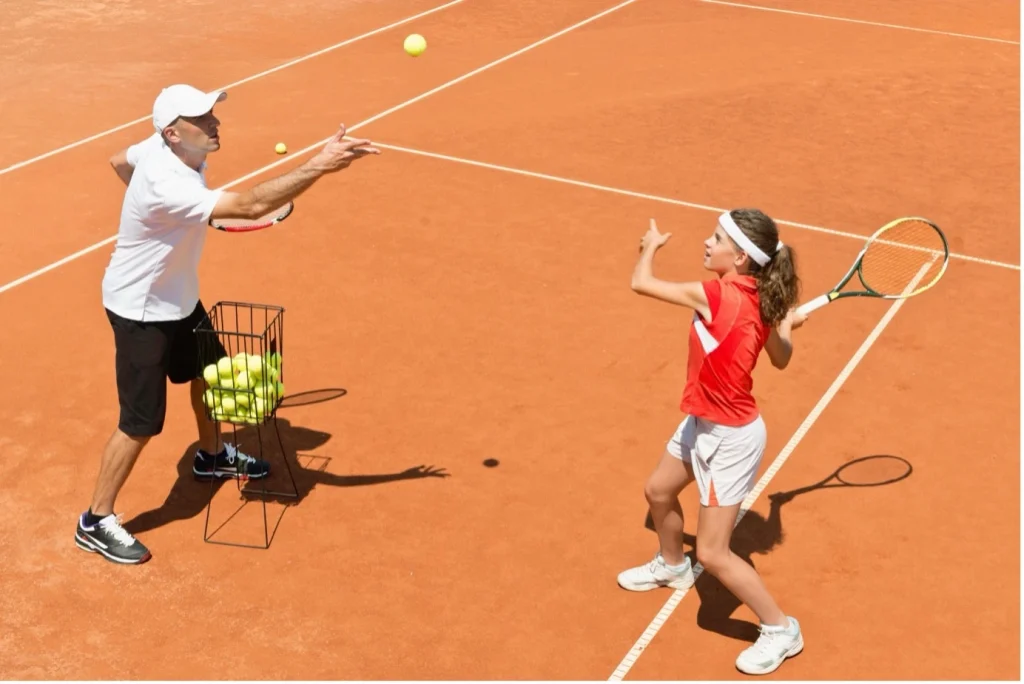
While experts in endurance sports have a fairly clear understanding of athletes’ workload, let us now consider what data on players’ workload is available for tennis coaches. The workload for runners is immense, and their movement is linear. Based on expert analysis, it is evident that the workload for tennis players is even greater, both in terms of movement content (direction changes during running), volume (up to 25 training hours per week), practice content (variety of movements and strokes), and the duration of tennis matches (which can last many hours) and competitions (several days, even up to two weeks).
Matchbeep
Matchbeep – a tool for monitoring players’ game development – analyses tennis practice and matches from the perspective of individual active phases. In addition, it provides analysis of speed, acceleration, quality of the contact point for each stroke, daily mental and physical condition of players, monitoring of tennis statistics, and more.
With the easy-to-use Matchbeep, coaches can monitor several workload indicators:
- Total practice time
- Active phase practice time
- Number of active phases
- Number of executed strokes
- Average number of strokes in active phases
- Distribution of active phases during practice
- Speed and acceleration in individual strokes.
All these workload indicators can be monitored for many players on a daily, weekly, or monthly basis. Using such a system, a coach can take a step forward towards long-term, objective, and individual practice planning for tennis players.